Most of the time, your garage door bottom seal goes about its business unnoticed. It blocks cold drafts, shrugs off rain, keeps dust out, and turns away the occasional mouse that fancies a peek inside. Then it cracks, flattens, or peels loose – and you notice everything at once. Your bills tick upward. The garage starts to feel like the driveway. And you’re left wondering whether you can handle a garage door bottom seal replacement yourself, or whether it’s time to pick up the phone.
We’ve walked plenty of homeowners through this decision, and there isn’t one tidy answer. What’s right for you depends on the damage you’re facing, how complicated your door is, and how much time you actually want to spend on it. Let’s break it down at Top Service Garage Door Repair!
What Is a Garage Door Bottom Seal, and Why Does It Matter So Much?
A bottom seal is a flexible strip – rubber, vinyl, or PVC, usually – attached along the base of your garage door. The idea is straightforward. When the door shuts, the seal squashes against the floor and forms a tight barrier. That barrier is the only thing standing between your garage and whatever’s happening outside.
Take the seal away, and the trouble adds up quickly. Winter air finds its way in. Summer cool slips out. Your heating and cooling system ends up working overtime just to break even. Worse, a gap at the bottom is practically a welcome mat for rodents, insects, and moisture – and those are the kinds of small problems that grow teeth if you leave them alone, which is exactly why a timely garage door seal replacement is worth the effort.
Usually you can spot the problem with your own eyes. A seal that’s cracked, brittle, torn, or no longer pressing flat against the floor has done its job and earned retirement. The subtler signs are worth watching too:
- Daylight peeking under a closed door
- Puddles on the garage floor after a storm
- An energy bill that keeps climbing for no clear reason
Notice any of these, and it’s time to take a closer look.
When a DIY Replacement Makes Sense for Budget-Conscious Homeowners
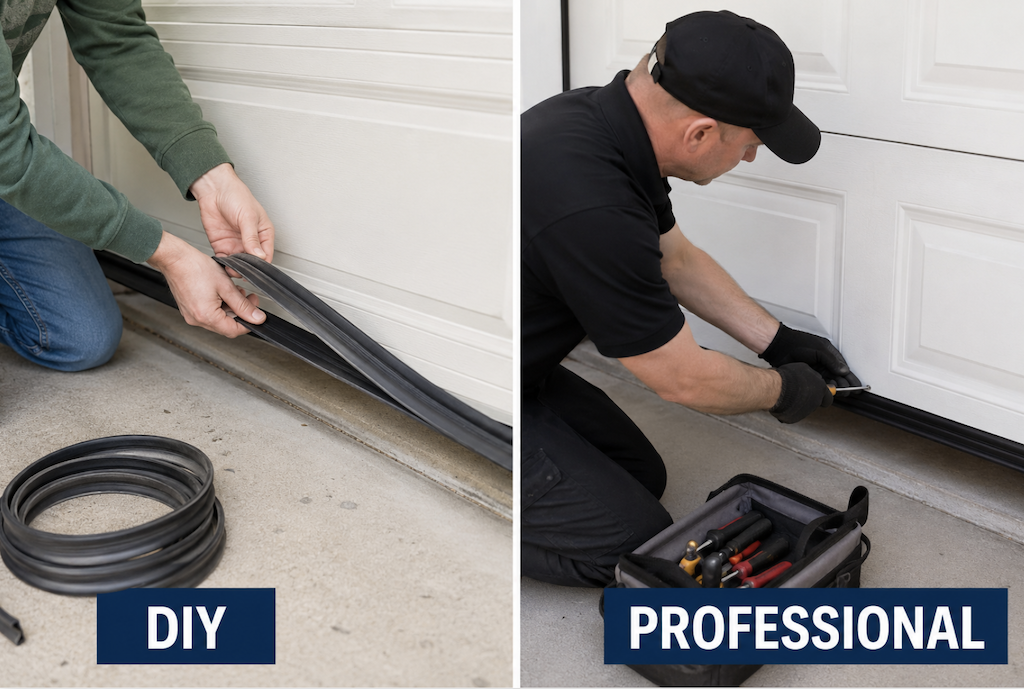
Given the right conditions, learning how to replace garage door seal strips yourself makes for a genuinely satisfying weekend job. You’ll want your door in decent shape, the retainer track undamaged, and a standard seal to work with – nothing exotic.
The good news is the toolkit is short:
- A flathead screwdriver
- A utility knife
- A replacement seal cut to your door’s width
The old seal slides or snaps out of the retainer channel, and the replacement seal for garage door drops in behind it. Set aside an hour or two, and you’ll spend a smaller amount on the fix.
This works best when the seal is the only thing that’s worn out and the rest of your door – hardware, alignment, all of it – is still behaving itself.
When Professional Replacement Is the Smarter, Safer Investment
Some jobs only pretend to be simple. If your metal retainer track is bent, rusted, or pushed out of line, dropping in a fresh seal won’t fix the real issue – and it might quietly make things worse. The track has to be sorted out first, and that calls for the right tools and a bit of experience.
Custom doors raise the stakes further. Oversized panels, arched tops, and unusual bottom profiles often need seals you won’t find hanging on a hardware store wall. When you need to replace a garage door seal bottom and don’t want to take any risks, we source and fit seals matched to your door’s exact specs, so the fit actually holds up over time.
Swapped the seal yourself and water’s still getting in? The seal probably isn’t to blame. More often the door itself sits slightly crooked, and even a small gap will let rain force its way through during a hard storm. Our technicians check the whole door system instead of just the seal, then fix any alignment trouble before the new one goes on. That’s the difference between a repair that lasts and one you’ll be redoing come spring.
Still Not Sure Which Route to Take? Here’s Our Advice
If your door is in good shape and the seal is the only thing that’s given out, go ahead – roll up your sleeves and do it yourself. But if you’re looking at a damaged track, a specialty door, or leaks that keep returning no matter what you try, call a professional. Getting it wrong usually costs more in water damage, pests, and wasted materials than the service call ever would.
Of course, you’re also to just give us a call if you want to save yourself the hassle.
FAQs
Most run five to ten years. Climate, how often you open the door, and material quality all factor in. Seals in regions with big temperature swings or heavy rainfall tend to give out sooner.
That depends on your door and your floor. T-style seals are common on residential doors, while bulb seals handle uneven concrete better. If you’re unsure which profile suits yours, check with a professional before buying.
More than you’d think. A worn seal lets conditioned air escape and outside air drift in, so your HVAC system has to work harder to keep pace. A timely garage door seal replacement is one of the cheapest ways to help your garage hold its temperature – and if you’d rather not wait, same-day garage door repair in South Florida can have it sorted before the next storm rolls in!

Raised in Plantation, Florida, Steve earned a bachelor’s degree from Troy State University. He is an experienced entrepreneur with ventures in oil, real estate, and the garage door industry, known for being adaptable, reliable, and innovative.
Steve is married with two children who have successful careers in South Florida. The Gorey family is proud of its deep roots in the region and its connection to the local community.